· Holt Ferris
Fly Tying Thread Guide
Thread is the one material that touches every single fly you tie, and it's also the one beginners think about the least. Pick the wrong denier and you'll spend your whole session fighting breakage or fighting bulk. This guide covers what denier actually means, which weight to reach for and when, how to choose color, waxed versus unwaxed, and why we settled on 100D as the thread that ships in our Complete Fly Tying Kit.
What "denier" actually means
Denier is a unit of thread weight — specifically, the mass in grams of 9,000 meters of the fiber. In practice, all you need to know is that a higher denier number means a thicker, generally stronger thread, and a lower number means a finer thread that lies flatter and adds less bulk. It's a more consistent way to compare threads than the old aught system (6/0, 8/0, and so on), which varies a bit between manufacturers.
| Denier range | Typical hook sizes | Best for |
|---|---|---|
| 50–70D | #16–#24 | Small dry flies, midges, delicate wraps |
| 70–100D | #10–#18 | General-purpose nymphs and dries |
| 100–140D | #4–#12 | Streamers, bass bugs, bulky bodies |
| 140D+ / heavy flat waxed nylon | #4–#8 | Spinning deer hair, big bulky patterns |
Full hook range covered across a typical fly tying thread lineup
— Tailwater measurements, 2026
Choosing a color
Color is mostly about whether you want the thread to disappear or show. Black and dark olive are the two most useful colors to keep on hand — they blend into most bodies and hide small imperfections in your wraps. White or fluorescent thread is worth having for patterns where the thread itself forms a hot spot, like an egg pattern or a nymph collar. As a rule for a beginner's first spool box: one black, one olive, one white or fluorescent, and you can tie the large majority of common patterns without hunting for a specific color.
Beyond those three, tan and brown cover most nymph and terrestrial bodies without needing to match an exact natural shade, and a bright red or orange spool is worth keeping around purely for hot-spot collars and thread heads that anglers (and fish) key in on in stained water. You don't need a full rainbow of colors to start — three or four spools genuinely covers the overwhelming majority of common patterns.
Waxed vs. unwaxed thread
Waxed thread has a thin coating that helps it grip dubbing fibers and resist fraying against a hook point, which makes it a better default for a beginner still learning consistent tension. Unwaxed thread lies flatter and is preferred for smooth, segmented bodies like a Pheasant Tail Nymph, where you don't want fibers clinging to the thread as you wrap. If you only keep one type on hand while you're starting out, lightly waxed thread is the safer all-purpose choice — it forgives more tying mistakes than unwaxed thread does.
Tension and bobbin setup
Whatever denier you're using, tension problems usually come from the bobbin, not the thread. Set your bobbin's tension so the spool turns with light resistance — enough that a hard tug will still pop it, but casual wrapping doesn't drag. If you're constantly snapping thread at the vise, drop down a denier before you assume you need a stronger brand. Read our first fly guide for the exact wrap sequence where tension matters most, and our fly tying desk guide for keeping spools organized so you're not hunting through a drawer mid-fly.
Why our Complete Fly Tying Kit ships with 100D thread
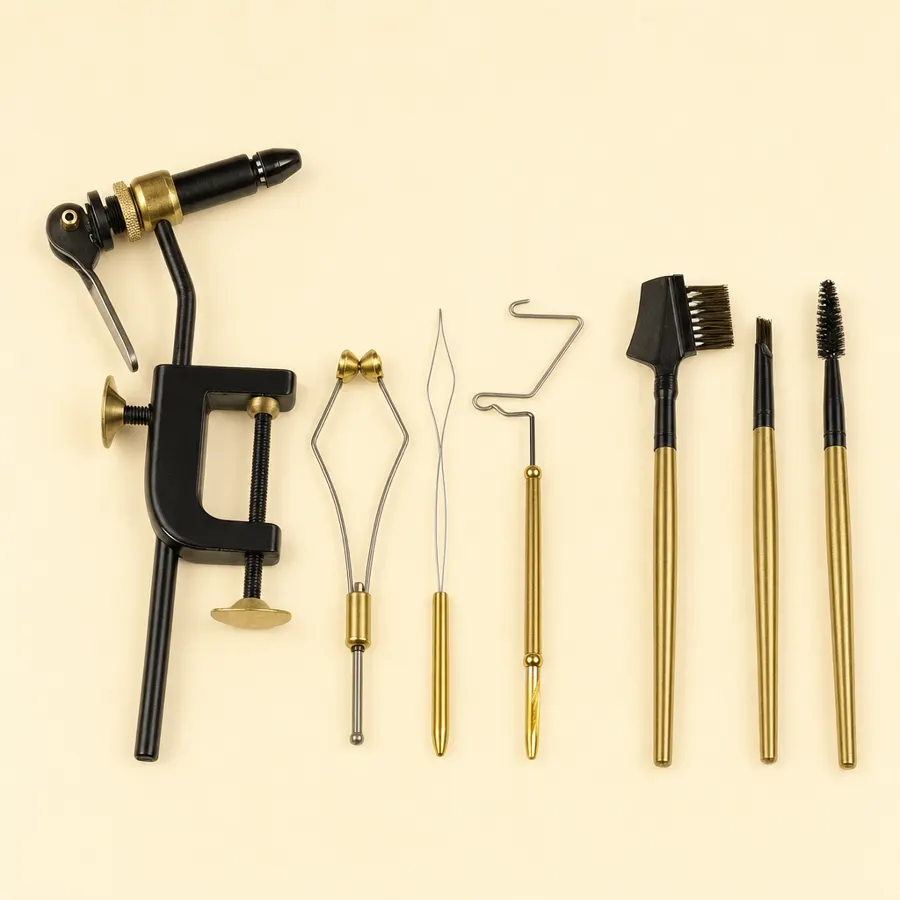
Our Complete Fly Tying Kit ($79.99) includes five spools of 100D, 220-yard thread alongside the vise, bobbin holder, whip finisher, hackle pliers, brushes, and tweezers. We picked 100D specifically because it sits in the middle of the range: strong enough for a size 8 streamer body, fine enough that it doesn't bulk up a size 14 nymph. For a beginner building their first fly box, one denier that handles most patterns beats five specialty spools you don't know when to reach for yet. Once you're tying a wider range — from size 20 midges up to size 4 streamers — that's when it's worth adding a lighter 70D and a heavier 140D to round things out.
Troubleshooting common thread problems
| Problem | Likely cause |
|---|---|
| Thread snaps mid-wrap | Bobbin tension too tight, or denier too light for the material you're packing in |
| Bulky, lumpy body | Denier too heavy for the hook size, or too many wraps stacked in one spot |
| Thread untwists and goes flat | Normal — flat thread is actually useful for smooth underbodies; spin the bobbin to re-twist it round again for wraps that need to bite |
| Colors bleed or look dull wet | Cheap, uncoated thread; a lightly waxed thread holds color and knots better on the stream |
Building out your spool box
Start with black and olive 100D, add white or fluorescent for hot spots, then expand toward 70D and 140D as your pattern list grows past Woolly Buggers into beginner patterns like Elk Hair Caddis and Pheasant Tail Nymphs. Store spools somewhere dust-free and out of direct sun — UV breaks down nylon and poly threads over time, and a spool that's sat in a sunny window for a season will snap more than one that's been in a drawer. A small labeled box or a simple thread rack at your desk keeps deniers and colors sorted so you're not guessing at labels mid-fly.
If you're only buying one spool today, buy 100D in black. It's the single most useful combination on this whole page — the same reason it's what ships in our own Complete Fly Tying Kit — and it will get you through your first fly and most of what comes after it.